Calculate your IRR instantly — enter your initial investment and annual cash flows, including any sale or reversion proceeds on exit. Supports unlimited hold periods.
Use the calculator below to find the Internal Rate of Return on a commercial real estate investment. Enter your purchase price, then each year's projected cash flow. Add sale proceeds to the final year's number for a complete hold-period return. The IRR updates automatically as you type.
Tip: Click the question mark icon () next to any field for more information.
IRR Calculator
$
Enter as positive — treated as Year 0 outflow
%
Compare your IRR against a minimum return threshold
Annual Cash Flows
Include sale / reversion proceeds in the final year
The NPV of your cash flows at different discount rates. When NPV crosses zero, that rate equals the IRR. Positive NPV means the investment exceeds that hurdle; negative means it falls short.
Discount Rate
Net Present Value (NPV)
Enter cash flows above
What is Internal Rate of Return (IRR)?
The Internal Rate of Return (IRR) is the annualized discount rate at which the Net Present Value (NPV) of all cash flows — both outflows and inflows — equals zero. In commercial real estate, IRR is the most comprehensive return metric available because it accounts for the time value of money, the full hold period, interim cash flows, and the ultimate exit value of the property.
Unlike the cap rate, which is a single-year snapshot of unlevered yield, or cash-on-cash return, which only measures annual distributions relative to equity, IRR captures the complete lifecycle of an investment from acquisition through disposition. This makes it the preferred return metric for institutional investors, private equity funds, family offices, and sophisticated individual investors evaluating commercial real estate opportunities.
The IRR Formula
IRR is defined as the discount rate r that satisfies the following equation — setting NPV equal to zero:
CF₀ = initial investment (negative); CF₁–CFₙ = annual cash flows; r = IRR. Because there is no algebraic solution, IRR is solved using iterative numerical methods (Newton-Raphson or bisection). Our calculator uses Newton-Raphson, which typically converges in fewer than 20 iterations.
The equation says: what rate of return, applied annually, makes all future cash flows exactly equal in present value to what you paid today? That rate is the IRR. When comparing two investments, the one with the higher IRR generates more return per dollar invested per year — assuming the reinvestment rate assumption holds (more on that under Limitations).
How to Calculate IRR: A Worked Example
Consider a commercial office building purchased for $1,000,000. The investor holds for 5 years, collecting net operating income annually, and sells at the end of Year 5.
Worked Example — 5-Year Value-Add Hold
Year 0: −$1,000,000 (acquisition)
Year 1: +$80,000 (stabilized NOI)
Year 2: +$85,000 (NOI after lease-up)
Year 3: +$90,000 (NOI at market rents)
Year 4: +$95,000 (NOI with rent bumps)
Year 5: +$100,000 (NOI) + $1,500,000 (sale at 6.5% exit cap) = +$1,600,000
IRR ≈ 16.2% — strong value-add return driven by NOI growth and cap rate compression on exit.
The going-in cap rate was $80,000 ÷ $1,000,000 = 8.0%. The exit cap rate was $100,000 ÷ $1,500,000 = 6.7%. That 130 bps of cap rate compression — plus five years of NOI growth — is what drives the 16.2% IRR above a simple income-only return. This is a common pattern in value-add commercial real estate investing.
What is a Good IRR for Commercial Real Estate?
A "good" IRR is defined relative to the investment's risk profile, asset class, leverage level, and strategy. The commercial real estate industry organizes deals into four broad risk-return categories, each with distinct IRR targets.
7% – 10%
Core
Stabilized Class A assets, low leverage, gateway cities
Ground-up development, distressed assets, maximum risk
Private equity real estate funds targeting value-add strategies typically advertise gross IRR targets of 15–20%, with net-to-investor IRRs (after management fees and carried interest) in the 12–15% range. Individual investors should compare deal IRRs against the opportunity cost of alternative investments, including equity markets, REITs, and the current risk-free rate.
IRR Benchmarks by Property Type (2025)
Target IRRs vary significantly by asset class, reflecting the risk premium investors demand for different property types, lease structures, and market dynamics. The table below reflects typical gross levered IRR targets for stabilized to light value-add commercial real estate in current U.S. market conditions.
Property Type
Strategy
Target IRR Range
Class A Multifamily
Core / Core-Plus
7% – 12%
Class B/C Multifamily
Value-Add
14% – 20%
Industrial / Logistics
Core to Core-Plus
8% – 13%
Grocery-Anchored Retail
Core-Plus
9% – 13%
Office (Class A CBD)
Core to Value-Add
10% – 16%
Self-Storage
Core-Plus to Value-Add
11% – 17%
Hotel (Full Service)
Value-Add
14% – 22%
Ground-Up Development
Opportunistic
18% – 30%+
Distressed / Note Purchases
Opportunistic
20% – 35%+
IRR vs. Other Commercial Real Estate Return Metrics
IRR is the most comprehensive return metric, but it is most powerful when used alongside complementary measures. Each metric tells a different part of the story.
IRR
NPV = 0 discount rate
Accounts for all cash flows, time value of money, and exit value. The most comprehensive return metric for multi-year holds.
Equity Multiple
Total Distributions ÷ Equity
Total return as a multiple of invested capital (e.g., 2.0x). Complements IRR by showing total profit — two deals at the same IRR can have very different multiples.
Cash-on-Cash Return
Annual Cash Flow ÷ Equity
Annual yield on equity invested. Accounts for leverage but ignores appreciation and exit. Best for current-income-focused strategies.
Cap Rate
NOI ÷ Property Value
Unlevered single-year yield. Ignores financing, time value, and future cash flows. Best for property comparison and initial valuation.
DSCR
NOI ÷ Debt Service
Measures debt coverage capacity. The primary lender underwriting metric — critical for loan qualification but not a measure of investor returns.
IRR and equity multiple are typically reported together by institutional investors because they tell different stories. A 5-year deal returning 15% IRR with a 1.8x equity multiple is very different from a 10-year deal at the same IRR with a 2.8x multiple — even though the annual return rate is identical.
Limitations of IRR in Commercial Real Estate
IRR is powerful, but it has well-documented limitations that every investor should understand before relying on it as the sole decision metric:
Reinvestment Rate Assumption: IRR implicitly assumes that all interim cash flows are reinvested at the same IRR rate. Reinvesting at 18–20% in practice is rarely achievable, which can overstate the effective return for high-IRR deals. The Modified IRR (MIRR) addresses this by allowing you to specify an explicit reinvestment rate.
Multiple IRR Solutions: When cash flows change sign more than once — for example, a large renovation outflow in Year 3 of an otherwise positive cash-flow property — there can be multiple mathematically valid IRR solutions, making the result ambiguous.
Terminal Cap Rate Sensitivity: In most CRE models, 60–80% of total return value is driven by the assumed exit price. A 0.25% difference in exit cap rate assumption can shift projected IRR by 200–400 basis points. Always run sensitivity analyses on your exit assumptions.
Does Not Measure Scale: A $100,000 investment returning 25% IRR and a $100M investment returning 15% IRR are not directly comparable in absolute dollar terms. IRR must always be paired with an equity multiple to convey the total profit generated.
Timing Manipulation: Deals structured with back-loaded cash flows — large reversion, low interim income — can show higher IRRs than deals generating steady annual distributions with identical total proceeds. Always evaluate the cash flow profile alongside the IRR.
How to Improve Your Investment's IRR
IRR is a function of cash flow timing and magnitude. You can improve it by increasing cash flows, accelerating their receipt, reducing the initial investment, or maximizing the exit value.
1
Negotiate a Lower Purchase Price — Reducing the Year 0 outflow has the largest single impact on IRR. A 5% reduction in acquisition price on a $5M deal saves $250,000 off the denominator, meaningfully improving the return rate.
2
Execute the Business Plan Quickly — IRR is highly sensitive to timing. A value-add renovation completed in 18 months instead of 30 means higher cash flows arrive earlier, compressing the effective discount period and boosting IRR significantly.
3
Optimize Your Exit Timing and Cap Rate — Sale proceeds typically represent 60–80% of total IRR in a commercial hold. Selling into cap rate compression, or at the moment of peak NOI growth, maximizes reversion value and lifts IRR disproportionately.
4
Maximize Early-Year Cash Flows — Since earlier dollars are worth more (time value of money), strategies that increase Year 1–2 NOI — such as burning off below-market leases quickly or adding ancillary income — disproportionately improve IRR.
5
Use Leverage Strategically — Positive leverage (unlevered yield exceeds the cost of debt) amplifies IRR. In higher-rate environments, verify your levered cash-on-cash exceeds your all-in borrowing cost before assuming leverage improves returns.
6
Execute a Cash-Out Refinance — A mid-hold refinance that returns equity to investors reduces the outstanding invested capital base. When properly modeled, this can significantly improve IRR on the remaining equity by reducing the denominator.
Frequently Asked Questions About IRR
What is a good IRR for commercial real estate?
A good IRR depends on risk profile: core investments target 7–10%, core-plus targets 10–14%, value-add targets 14–20%, and opportunistic strategies target 20%+. As a general benchmark, an IRR above 15% for a value-add deal with moderate leverage (65–70% LTV) is considered strong in current market conditions.
What does a 20% IRR mean?
A 20% IRR means that, accounting for the time value of money across all cash flows and exit proceeds, your investment is compounding at 20% per year. This is in the upper value-add to opportunistic range and implies meaningful execution risk — typically involving significant property improvement, substantial lease-up, or aggressive market timing.
What is the difference between IRR and ROI?
ROI (Return on Investment) measures total profit as a simple percentage of invested capital, with no adjustment for time. IRR accounts for when cash flows occur — a dollar returned in Year 1 is worth more than a dollar returned in Year 5. For any investment held longer than one year, IRR is significantly more accurate than simple ROI.
What is levered vs. unlevered IRR?
Unlevered IRR (property-level IRR) calculates return on the full asset value, ignoring debt financing. Levered IRR (equity IRR) uses only the equity invested and cash flows after debt service and interest. Levered IRR is almost always higher when positive leverage exists, but it also carries greater downside risk if the property underperforms debt service requirements.
Can IRR be negative?
Yes. A negative IRR means the investment lost money in time-value terms — total present value of returns was less than the initial investment. Negative IRRs occur in scenarios with sustained high vacancy, unexpected capital expenditures, or a forced sale below acquisition price.
What is a hurdle rate?
A hurdle rate (also called a preferred return) is the minimum IRR that must be achieved before a sponsor or general partner earns carried interest. Typical real estate fund hurdle rates are 6–9% for core funds and 8–12% for value-add funds. The IRR must clear this threshold before profits are split beyond a pari passu return of capital.
Note: The commercial mortgage calculators
displayed in this website should be used as a guideline and do not represent a commitment to lend.
Commercial Loan Direct and CLD Financial, LLC are not liable for any calculation errors resulting from
the use of these calculators.
The total upfront cash outlay at the time of acquisition — typically your equity down payment plus all closing costs (loan origination, appraisal, title, legal fees). Enter as a positive number; the calculator automatically treats it as a Year 0 outflow (negative cash flow).
Do not include the loan amount — only your out-of-pocket equity investment
Example: $1,000,000 purchase with 25% down + $25,000 closing costs = $275,000 initial investment
The initial investment is the denominator that most influences your IRR — a lower acquisition cost dramatically improves returns
The minimum acceptable annual return on this investment — your required return threshold before the deal is considered viable. The calculator compares your calculated IRR against this rate and indicates whether you meet, exceed, or fall short of the target.
Core real estate targets: 7–10%
Value-add targets: 14–20%
Opportunistic targets: 20%+
Set your hurdle rate based on your risk tolerance, cost of capital, and alternative investment returns
Commercial Loan Finder
Fill this form out to find the best commercial loan programs for your needs.
Get A Free Quote
Get a free commercial loan quote. This process does not affect your credit score.
Real Deals. Real Results.
Success Stories
See how we've helped borrowers across the country close complex deals and reach their goals.
SBA 7(a)
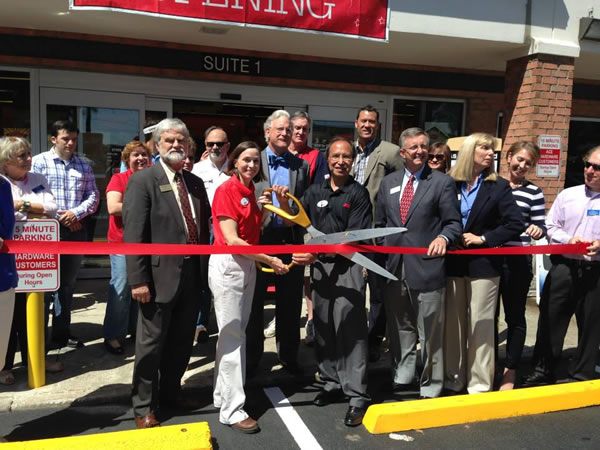
New Ace Hardware Franchise Financing
Alpharetta, GA Retail Franchise Real Estate + Working Capital
CLD was most helpful from answering my initial questions to the follow up... We would not have been able to start this business without CLD.
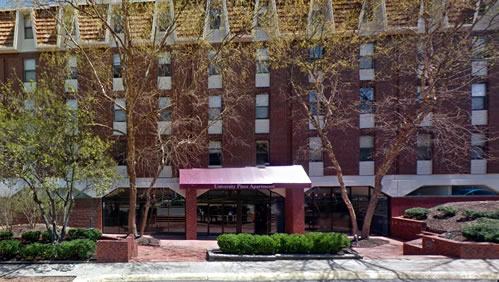
Bakersfield, CA Luxury Multifamily Non-Recourse · 10-Yr I/O
I had a tremendously good experience with CLD and especially with my loan specialist — she identified the ideal loan program and handled everything professionally.
Password is incorrect. If you forgot your password
please click the forgot password link (it opens in a new tab). Alternatively use a different
email if
you cannot recall your password.
 SBA 7(a)
 CMBS
CMBS
 Conventional